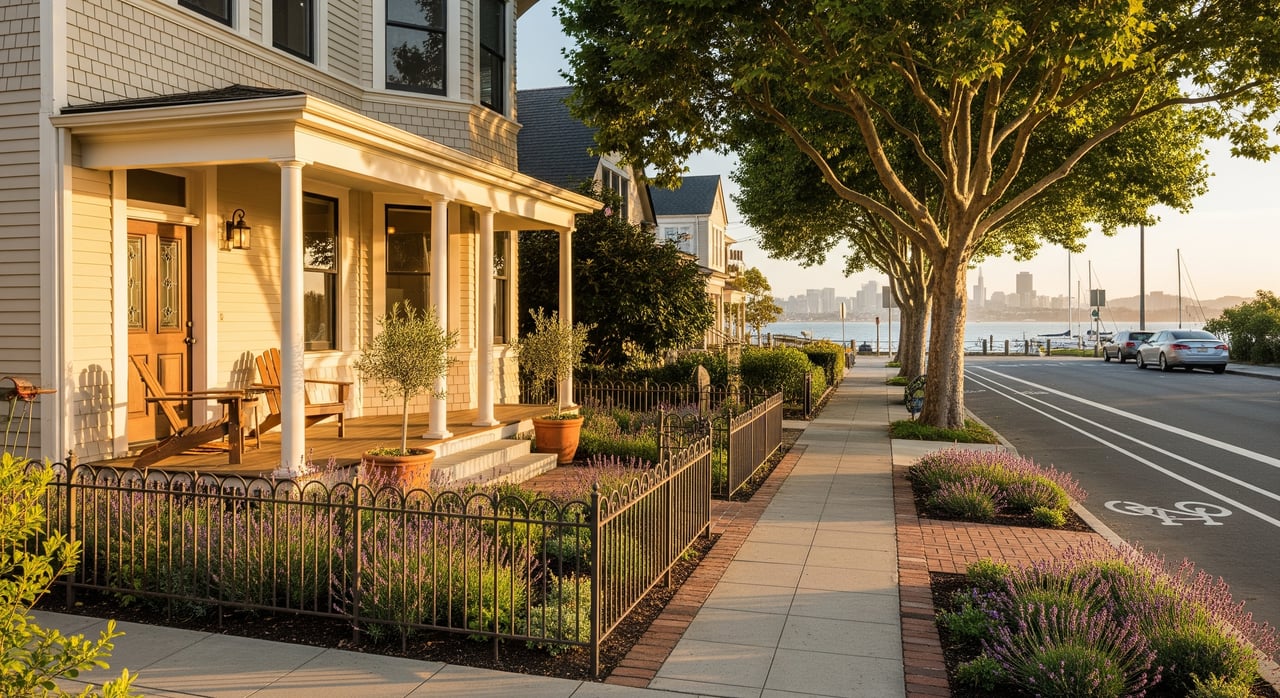
Wish you could run most errands without getting in the car? In Alameda, you can, especially if you focus on a few key areas that make daily life on foot simple and enjoyable. If you value short walks to groceries, coffee, parks, and transit, you are in the right place.
This guide breaks down what walkability looks like in Alameda and highlights three areas that consistently deliver: Park Street, Webster Street, and Bay Farm Island’s town center. You will see what is within a short walk, how transit connects, which housing types are nearby, and the tradeoffs to consider. Let’s dive in.
What walkability means in Alameda
Walkability in Alameda is about more than a high score. It is about practical access to daily needs, like grocery stores, pharmacies, cafes, banks, and nearby parks. A connected street grid with short blocks and marked crossings matters too, along with sidewalks, lighting, trees, and calm traffic that make walking feel safe and pleasant.
Alameda’s geography helps. The island is mostly flat, which makes walking easier, and its compact commercial corridors place many errands close together. The near‑shore climate is generally mild year‑round, so walking is comfortable most days. Constraints exist as well. There is no on‑island BART station, and some corridors are more auto‑oriented, so walkability can drop as you move away from core commercial streets.
Park Street: classic main street convenience
Park Street is Alameda’s historic main street. It offers continuous storefronts and a traditional pedestrian feel, with short blocks and many ground‑floor shops and services.
Everyday errands within 5–15 minutes
- Independent restaurants, bakeries, and cafes for daily meals and coffee
- Neighborhood markets and grocery options
- Pharmacy and drugstore choices
- Banks, salons, small professional services
- Nearby parks and civic amenities, with exact proximity varying by address
Transit connections
- Local bus routes link Park Street to Oakland and other parts of Alameda
- Proximity to cross‑island roads supports multimodal commutes
- Ferry options to San Francisco are available from Alameda terminals, with schedules subject to change
Housing fit
- Mix of older cottages, small apartment buildings, and homes near the corridor
- Works well if you want errands within a 5–15 minute walk and an active street scene
Tradeoffs to expect
- Busy traffic and higher parking demand during peak times
- Street noise and event crowds during festivals or weekend activities
Webster Street: neighborhood‑focused convenience
Webster Street offers a compact commercial spine that serves nearby residential blocks. Some segments feel more car‑oriented, yet many blocks still provide a comfortable pedestrian experience.
Everyday errands within 5–15 minutes
- Neighborhood and specialty restaurants, bakeries, and coffee
- Small groceries and markets
- Personal services and local institutions within walking distance, depending on the address
Transit connections
- Direct access to Oakland via the Webster Tube corridor for bus service
- Good for combining short walks with short bus rides to regional transit
Housing fit
- Mix of older single‑family homes, duplexes, and small apartment buildings
- A solid choice if you want local retail without the fuller tourism energy of Park Street
Tradeoffs to expect
- Some blocks have wider curb cuts and less continuous storefronts
- Nighttime pedestrian activity can feel different from daytime; conditions vary by block
Bay Farm Island Town Center: planned, suburban walkability
Bay Farm’s town center (often called Harbor Bay Village in some areas) is a planned, mixed‑use hub. It favors wider sidewalks and clusters of retail that support short internal trips.
Everyday errands within 5–15 minutes
- Grocery options, pharmacy, coffee shops, and restaurants
- Fitness studios, professional services, and small parks
- Access to waterfront trails and segments of the Bay Trail for recreation
Transit connections
- A nearby ferry terminal provides water transit to San Francisco, with schedules that change over time n- Local bus service connects to Oakland and other East Bay points
Housing fit
- Newer condos, townhomes, planned neighborhoods, and single‑family homes
- Great if you want a suburban feel with a small, walkable center plus easy outdoor paths
Tradeoffs to expect
- Walkability is strongest within the town center; you may still drive for some errands
- Commuter parking near the ferry can affect curb space and walking routes at busy times
How to choose your walkable fit
- Choose Park Street if you want the most classic main street experience, frequent storefronts, and lively sidewalks.
- Choose Webster Street if you prefer a neighborhood‑oriented corridor with local eateries and services nearby.
- Choose Bay Farm’s town center if you like newer planning, wider sidewalks, and short walks within a defined hub, plus easy access to waterfront paths.
Your best match depends on your daily routine. If your priority is a quick pharmacy run and plentiful coffee options, Park Street often wins. If you want local flavor with a slightly quieter feel, Webster can be a great fit. If you want suburban comfort with a contained set of conveniences and access to trails, Bay Farm’s town center is worth a close look.
Test walkability in person
Walkability is hyper‑local and can change block to block. Use this quick checklist:
- Map your daily needs. Check walking times to groceries, pharmacy, bank, a park, and a transit stop.
- Walk your routine. Try your weekday commute route and your weekend errand loop at the times you would normally go.
- Note sidewalk quality. Look at widths, curb ramps, crosswalk markings, and lighting.
- Watch traffic patterns. Observe turning movements, loading zones, and busier hours.
- Scan the retail mix. Are essential services open and active, and are there gaps that matter to you?
- Confirm transit. Review local bus and ferry options for peak and off‑peak times.
Ready to compare homes near Park Street, Webster Street, or Bay Farm’s town center, or to prep your current home for a move? Reach out to Annie Tegner for neighborhood‑savvy guidance, tailored planning, and design‑forward execution. Get your free East Bay home valuation.
FAQs
Is car‑light living realistic in Alameda’s walkable areas?
- Yes. In and around Park Street, Webster Street, and Bay Farm’s town center, you can reach many daily needs on foot. Outside those hubs, some errands may require a short drive or transit ride.
What transit options can replace a car for regional commutes from Alameda?
- Local buses connect to Oakland and regional hubs, and ferry service provides water transit to San Francisco. There is no BART station on the island, so most BART trips start with a short bus or car connection.
Which Alameda area feels most urban versus more suburban for walkers?
- Park Street feels the most urban and active, Webster Street is neighborhood‑oriented with steady amenities, and Bay Farm’s town center is walkable inside the hub with a more suburban feel outside it.
Are sidewalks and crossings suitable for families and older adults in Alameda?
- Many blocks offer continuous sidewalks and signalized crossings, though conditions vary by block. Look for curb ramps, marked crosswalks, and pedestrian lighting near your specific address.
What tradeoffs come with living close to shops and restaurants in Alameda?
- You gain convenience and street life, yet you may experience more traffic, higher parking demand, and occasional event crowds. Quieter residential blocks often trade some walkability for calmer streets.